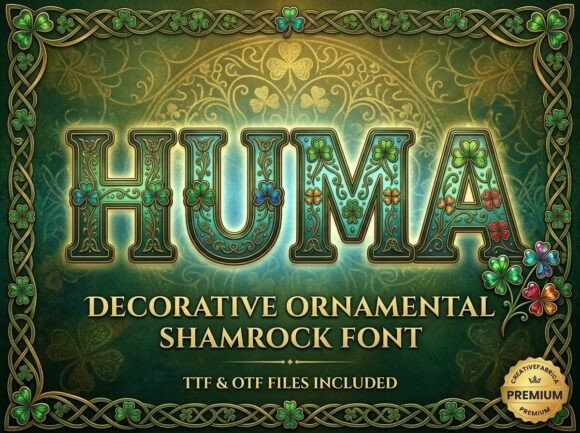
Huma Font: Celtic Decorative Type for Crafters
Celebrate Heritage and Luck with Huma in St. Patrick’s Day Printables
Celebrate heritage and luck with Huma, a premium decorative font inspired by the intricate beauty of Celtic artistry that transforms standard holiday printables into high-value digital downloads. As creators of seasonal stationery and party supplies, we know that standing out in a saturated market requires more than just green clipart; it demands typography that tells a story. Huma delivers this narrative through its lush teal-to-gold gradients and hand-painted shamrock motifs, making it an exceptional choice for St. Patrick’s Day greeting cards, festive banners, and cultural heritage posters. When designing printable wall art or digital invitations for March celebrations, this typeface provides an instant focal point that communicates warmth, tradition, and premium quality without requiring hours of custom illustration work.
For Etsy sellers and digital product creators, the visual richness of Huma allows for higher perceived value in downloadable assets. Instead of using flat, single-color text, the built-in gradient effects mimic the look of hand-lettered watercolor or gouache, which is highly sought after in the printable niche. This means you can create "done-for-you" designs that look bespoke and artisanal. Whether you are crafting a "Lucky Charm" birthday invitation suite or a heritage-themed classroom poster, the font’s inherent decorative elements reduce the need for excessive embellishments, keeping your file sizes manageable while maximizing visual impact. The shamrock motifs integrated into the letterforms serve as natural design anchors, guiding the viewer's eye and reinforcing the thematic connection to Irish culture and good fortune.
Using Huma for Wedding Invitations and Elegant Branding
Huma and other decorative fonts excel in wedding stationery and boutique branding where couples and clients seek a touch of ancestral romance and organic elegance. In the competitive world of wedding design, typography sets the tone for the entire event, and this specific typeface bridges the gap between traditional Celtic knotwork and modern romantic aesthetics. The teal-to-gold colorway is particularly versatile for autumn weddings, forest-themed ceremonies, or vow renewals that honor family lineage. When used for names on place cards, welcome signs, or menu headers, the hand-painted texture adds a layer of intimacy that standard serif fonts simply cannot achieve, making guests feel the personal significance of the celebration.
From a production standpoint, Huma works beautifully for physical products like acrylic table numbers and wood-burned signage. The gradient effect translates surprisingly well to UV printing on acrylic and ceramic, giving mass-produced items a custom, handcrafted appearance. For brand identity projects, such as logos for Irish pubs, heritage bakeries, or Celtic jewelry shops, this font acts as a powerful signifier of authenticity. However, because of its intricate details, it is best reserved for display use—names, titles, and short taglines—rather than body copy. Pairing Huma with a clean, minimalist sans serif font for logistical details ensures that your wedding programs or brand packaging remain readable while the decorative typeface handles the emotional heavy lifting. This strategic contrast not only improves legibility but also elevates the overall sophistication of the design layout.
Huma Font Readability Tips for Cricut and Silhouette Cutting Machines
Decorative fonts like Huma require specific technical considerations when adapting them for vinyl cutting, laser engraving, and sublimation projects to ensure successful production runs. While the lush teal-to-gold gradients are stunning on screen, crafters using Cricut or Silhouette machines must remember that cutting devices do not print gradients; they cut shapes. For vinyl decals on tumblers, car windows, or tote bags, you will likely need to use a solid color version of the font or convert the gradient letters into separate layered SVG files if the design software supports it. Alternatively, this typeface is a prime candidate for sublimation printing, where the full-color complexity of the shamrock motifs and gradient transitions can be reproduced faithfully on polyester fabrics, coated mugs, and metal ornaments without losing any detail.
When planning to cut Huma from adhesive vinyl or heat transfer vinyl (HTV), pay close attention to the fine lines within the hand-painted shamrock motifs. Intricate decorative fonts can sometimes have thin connectors that may tear during weeding or fail to adhere properly to textured surfaces. To mitigate this, consider slightly increasing the letter spacing or scaling up the design for smaller applications like jar labels or pen wraps. For laser engraving on wood or leather, the varying stroke widths of Huma create beautiful depth, but you should always run a test patch to ensure the finer details don't burn away completely. Understanding these material constraints allows you to leverage the font’s beauty across different mediums, ensuring that your physical products maintain the same premium feel as your digital mockups.
Pairing Huma with Sans Serif Fonts for Product Labels and Packaging
Huma and complementary sans serif fonts form the perfect partnership for product packaging and labels where commercial readability must coexist with artistic flair. As small business owners, we often struggle to balance unique branding with functional clarity, especially on candle labels, soap wrappers, and tea tins where safety information and ingredients are mandatory. Huma serves as the charismatic headline, drawing customers in with its Celtic charm and vibrant colors, while a simple, geometric sans serif handles the regulatory text and product descriptions. This hierarchy prevents the design from becoming visually chaotic and ensures that customers can quickly identify what the product is, even from a distance on a crowded shelf or in a thumbnail image.
The teal-to-gold palette of Huma also offers built-in color coordination cues for your packaging design. You can pull the deep teal for background elements or borders and use the gold accent color for foil stamping or metallic ink highlights on luxury boxes. This creates a cohesive brand system that feels intentional and professionally designed. For handmade sellers offering customizable gifts, providing a template where Huma is pre-set for the customer’s name and a secondary font is set for the date or message streamlines the personalization process. By establishing these pairing rules early in your design workflow, you ensure consistency across your entire product line, from shipping tags to thank-you cards, reinforcing brand recognition and trust with every purchase.
Commercial Licensing for Selling Huma Designs on Etsy and Digital Marketplaces
Huma and similar premium decorative fonts come with licensing terms that directly impact how crafters and sellers can monetize their creations on platforms like Etsy, Creative Market, and Amazon Merch. Before listing any product featuring this typeface, it is critical to verify whether your license covers physical end-products, digital templates, or both. Generally, most commercial licenses allow you to sell finished goods like printed invitations, apparel, and home decor, but restrict the resale of the font file itself or unflattened digital assets where the font could be extracted. Understanding these distinctions protects your shop from intellectual property disputes and ensures you are supporting the type designer who created this intricate Celtic artistry.
For creators selling editable Canva templates or Corjl files, confirm that the font license explicitly permits embedding or sharing via third-party platforms. Some premium font foundries require a separate server license for web-based editing tools. Additionally, if you plan to use Huma in logo design or trademarked brand identities for clients, check if an extended or exclusive license is necessary, as standard commercial licenses often exclude trademark usage. Keeping accurate records of your font licenses and linking them to your shop’s internal asset management system is a best practice for professionalizing your creative business. This diligence not only keeps you compliant but also adds value to your client work, as you can confidently assure buyers that their new branding or merchandise is legally sound and ethically sourced.